Marketing analytics
Stop guessing what’s working and start making decisions you can stand behind.
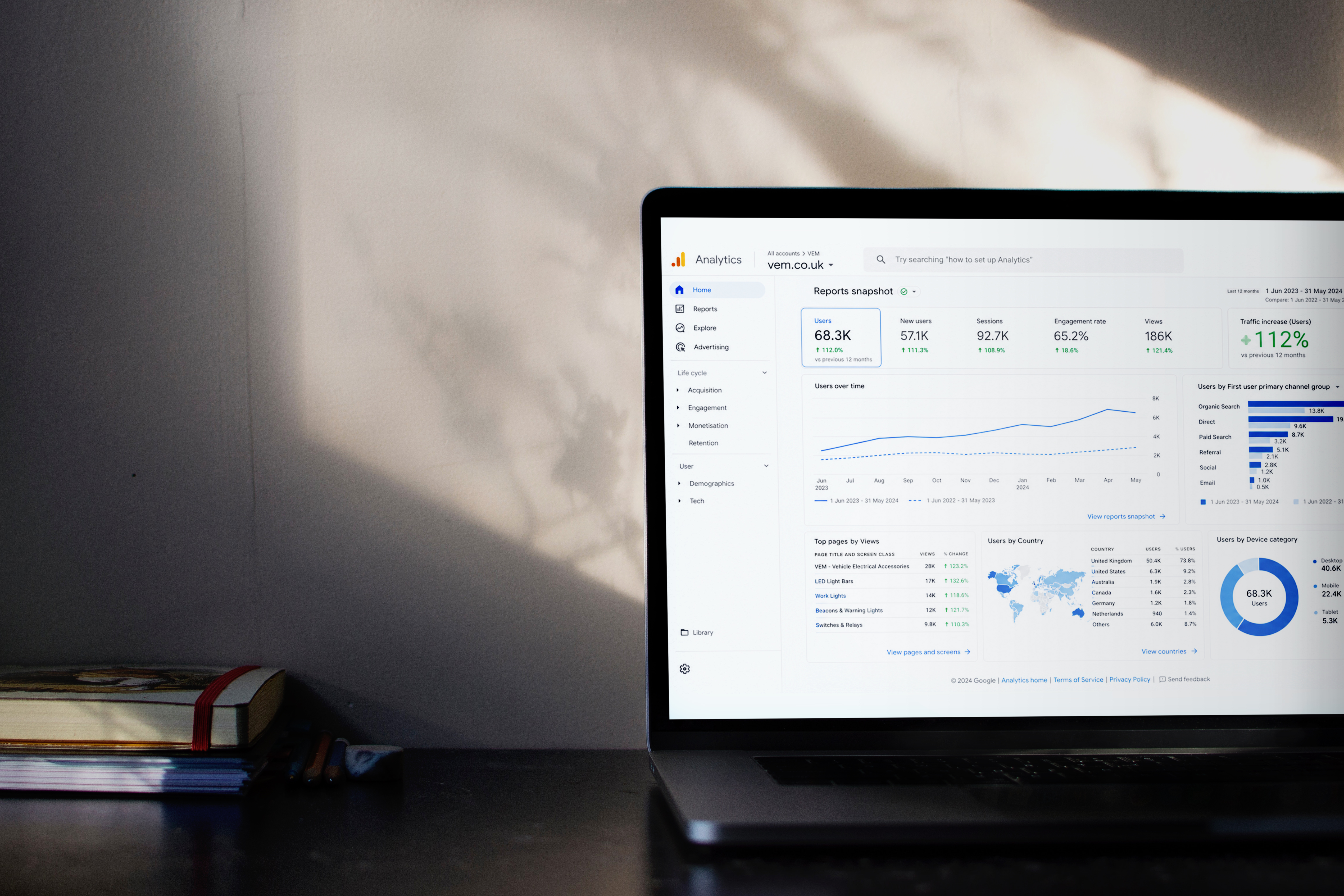
Take the guesswork out of growth with marketing analytics.
Most businesses have data. Very few have clarity.
Our approach demystifies data, providing clear, actionable insights that drive strategic decision-making. Bringing your marketing analytics data into one clear view so you can understand performance across channels, campaigns, and activity; making it useable, so you can see what’s contributing to growth, where value is being lost, and what needs to change. No vanity metrics. No overcomplication. Just the numbers that matter, explained properly.
From tracking setup to data analysis, we focus on turning information into something practical, not overwhelming. Reports shouldn’t just show you what happened, they should help you decide what happens next.
Testimonial
Fantastic company to work with. I have worked with many internal and external marketing teams but none of them have been any where near as good as the quality Ouma produce. The team are also brilliant to work with and understand every assignment quickly and efficiently. Highly recommend.
FAQs
- What is marketing analytics?
Marketing analytics and data analysis involve collecting, tracking, and interpreting data from your marketing activity to understand performance. This includes analysing traffic, user behaviour, conversions, and revenue to identify what’s working and where improvements can be made. - Why is data analysis important for business growth?
Data analysis is essential because it removes guesswork. It helps businesses make informed decisions, improve marketing efficiency, reduce wasted spend, and focus on the activity that drives real results. - What data should my business be tracking?
Key data includes website traffic, user behaviour, lead sources, conversion rates, customer journeys, and revenue attribution. Tracking the right data ensures you can clearly understand how marketing contributes to business growth. - What tools are used for analytics and data tracking?
We work with tools such as Agency Analytics, Google Analytics, Google Tag Manager, CRM platforms like HubSpot, and platform-specific data sources. The goal is to create a connected view of your data, not isolated reports. - What is the difference between data analysis and data analytics?
Data analysis and data analytics are closely related but distinct. Data analysis is the process of examining a specific data set to answer a defined question, looking at what has already happened and drawing conclusions from it. Data analytics is the broader discipline that encompasses data analysis but goes further, using statistical modelling, pattern recognition and predictive tools to understand trends, forecast outcomes and inform future decisions. In a marketing context, data analysis might tell you which campaign generated the most leads last month. Data analytics tells you why, what is likely to happen next, and where to invest to improve results. - How does marketing analytics reporting work?
Marketing analytics reporting works by collecting data from across your marketing channels, paid media, organic search, social, email, CRM and website, and consolidating it into a structured view that connects activity to commercial outcomes. At Ouma, reporting is built around the metrics that actually matter to the business: cost per qualified lead, conversion rate by source, pipeline value attributed to marketing and customer acquisition cost. Rather than presenting raw numbers, effective marketing analytics reporting tells the story behind the data, what is working, what is not, and where the next opportunity is. The goal is not a dashboard. It is a decision. - Why do I need marketing analytics?
Because without it, marketing spend is guesswork. Marketing analytics gives businesses the commercial visibility to understand what is actually driving growth, which channels are generating qualified demand, where leads are converting and where they are dropping off, and what the true return on every pound of marketing investment is. For scaling businesses, marketing analytics is the difference between making decisions based on instinct and making decisions based on evidence. It removes the noise, connects activity to outcomes and gives leadership the clarity to invest with confidence rather than hope. - Do you provide marketing analytics and reporting for Welsh businesses?
es. For Sana Private Health, based in Swansea and Bridgend, our reporting connected media investment directly to pipeline value. For Runtech in Port Talbot, we built client-facing dashboards giving real-time visibility of performance that previously took hours to assemble manually.