How AI automation saved Vibrant Energy Matters £350,000 per year
When Vibrant Energy Matters faced rising staffing costs and slow response times, Ouma rebuilt their entire customer service operation using AI automation, saving £350,000 annually, cutting response times from 20 minutes to one second, and creating 24/7 coverage at half the cost.
By Ouma · 2026-05-30 · 5 min read

Customer service should support growth, not slow it down. For Vibrant Energy Matters, it was doing the opposite - until the system was rebuilt from the ground up.

Result | Impact |
|---|---|
£350,000 | Annual salary savings |
50% | Operational cost reduction |
1 second | Customer response time (down from 20 minutes) |
24/7 | Customer service coverage — no office hours, no capacity limits |
The challenge
Vibrant Energy Matters (VEM) is a growing energy services business with an ambitious leadership team and a clear commercial vision. But their customer service operation had become a ceiling for growth rather than a driver of it.
Every enquiry, every booking, every follow-up and every customer update depended on manual input from the team. Response times averaged 20 minutes. Staff were spending the majority of their working day on repetitive administrative tasks; tasks that added no strategic value and that the business was paying a significant salary overhead to maintain.
As VEM grew, the problem compounded; more customers meant more volume, more volume meant more staff, more staff meant higher costs, more management complexity, and an operation that was getting harder to run without getting meaningfully better for the customer.
The instinct in most businesses at this point is to hire. VEM came to Ouma, and we asked a different question: what if we rebuilt the system instead?
 What became clear
When we mapped VEM's customer service operation, the structural problem became obvious quickly.
The team were not slow because they lacked effort or capability. They were slow because every touchpoint; inbound enquiries, outbound follow-ups, appointment bookings, customer updates, was running through the same manual process. There was no intelligent routing. No automation at any stage of the journey. No way for the system to handle straightforward, repeatable interactions without a person in the loop.
The result was a team spending the majority of their time on work that could be automated, leaving too little capacity for the conversations that actually required human judgement and relationship.
The demand was there. The team were capable. The system was the problem.
The strategy
Rather than recommending additional headcount, we proposed a complete rebuild of VEM's customer service architecture, replacing manual processes with a bespoke AI automation system designed specifically around VEM's operation, customer journey and commercial objectives.
The goal was not to remove people from the business. It was to remove people from the tasks that didn't need them, freeing the team for higher-value conversations while AI handled the volume, the repetition, and the out-of-hours demand that no team could cost-effectively cover.
What we built
AI agents across every touchpoint
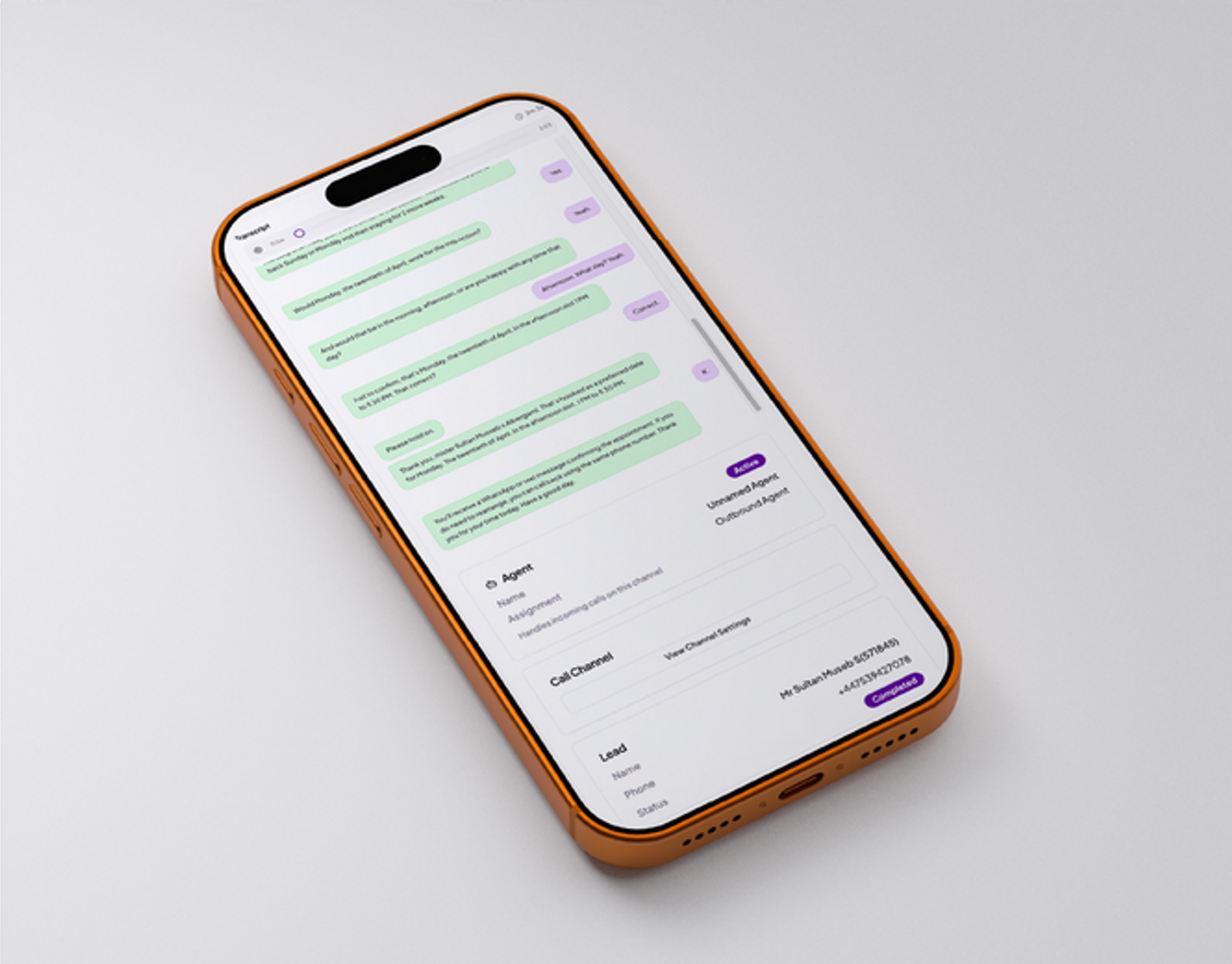 We implemented task-specific AI agents across VEM's full customer service ecosystem; inbound calls, outbound calls, live chat and WhatsApp. Each agent was trained for a specific function, separating enquiry handling from booking conversion to ensure every interaction was handled by a system optimised for that particular task.
Intelligent contact optimisation
We introduced pre-call SMS alerts, and restructured VEM's contact windows to include evening and weekend touchpoints, significantly improving answer rates and customer engagement at the moments when their customers were most likely to respond.
Booking automation
We integrated the AI system directly with VEM's booking infrastructure. Appointments are now scheduled without human intervention, the AI handles the full booking conversation, confirms availability, and completes the transaction end-to-end.
Knowledge infrastructure
We built a dynamic internal knowledge hub; a structured, approved database of service information that AI agents draw from to deliver accurate, consistent responses across every channel. This eliminated the inconsistency that had previously come from different team members handling the same query in different ways.
Control and visibility
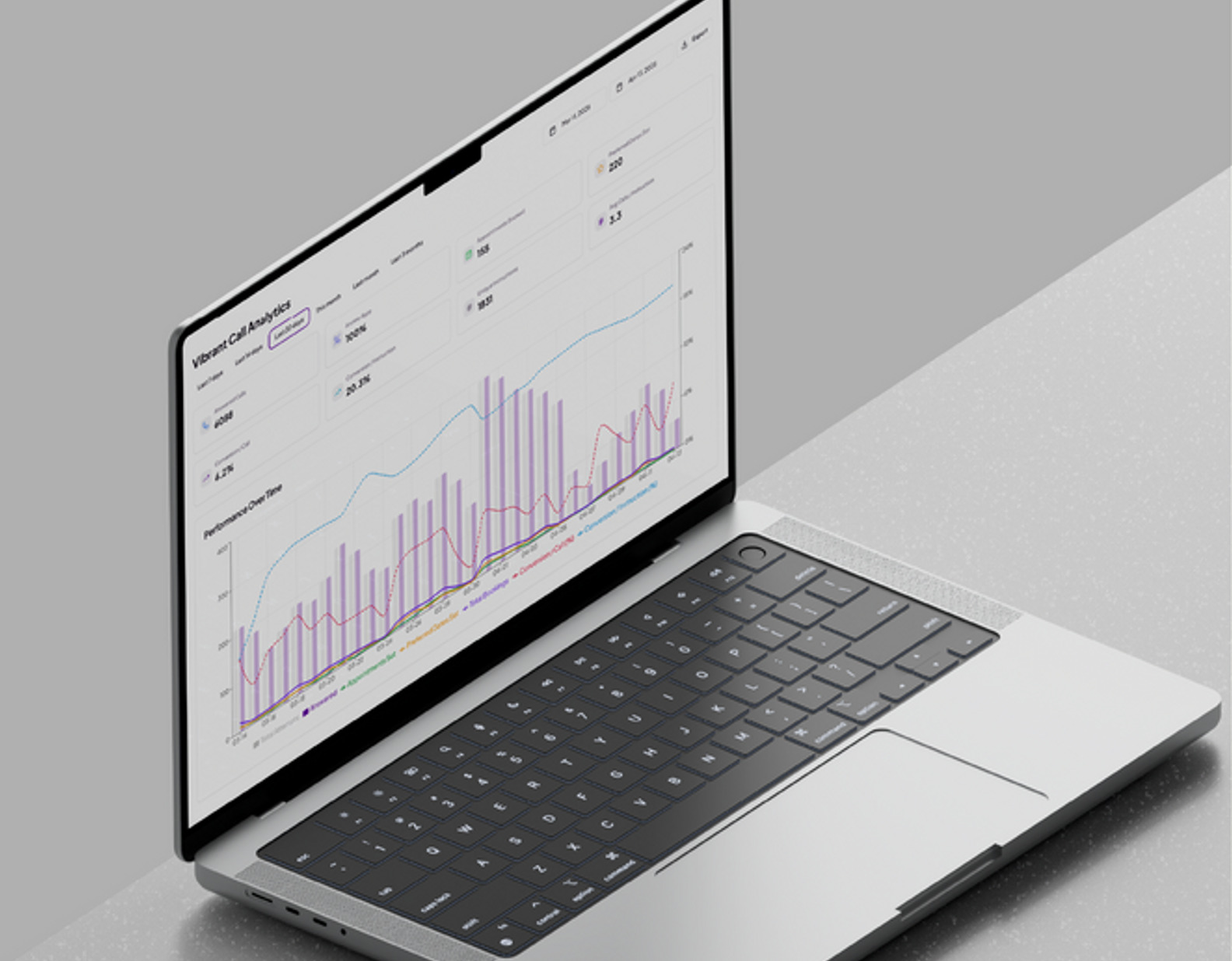
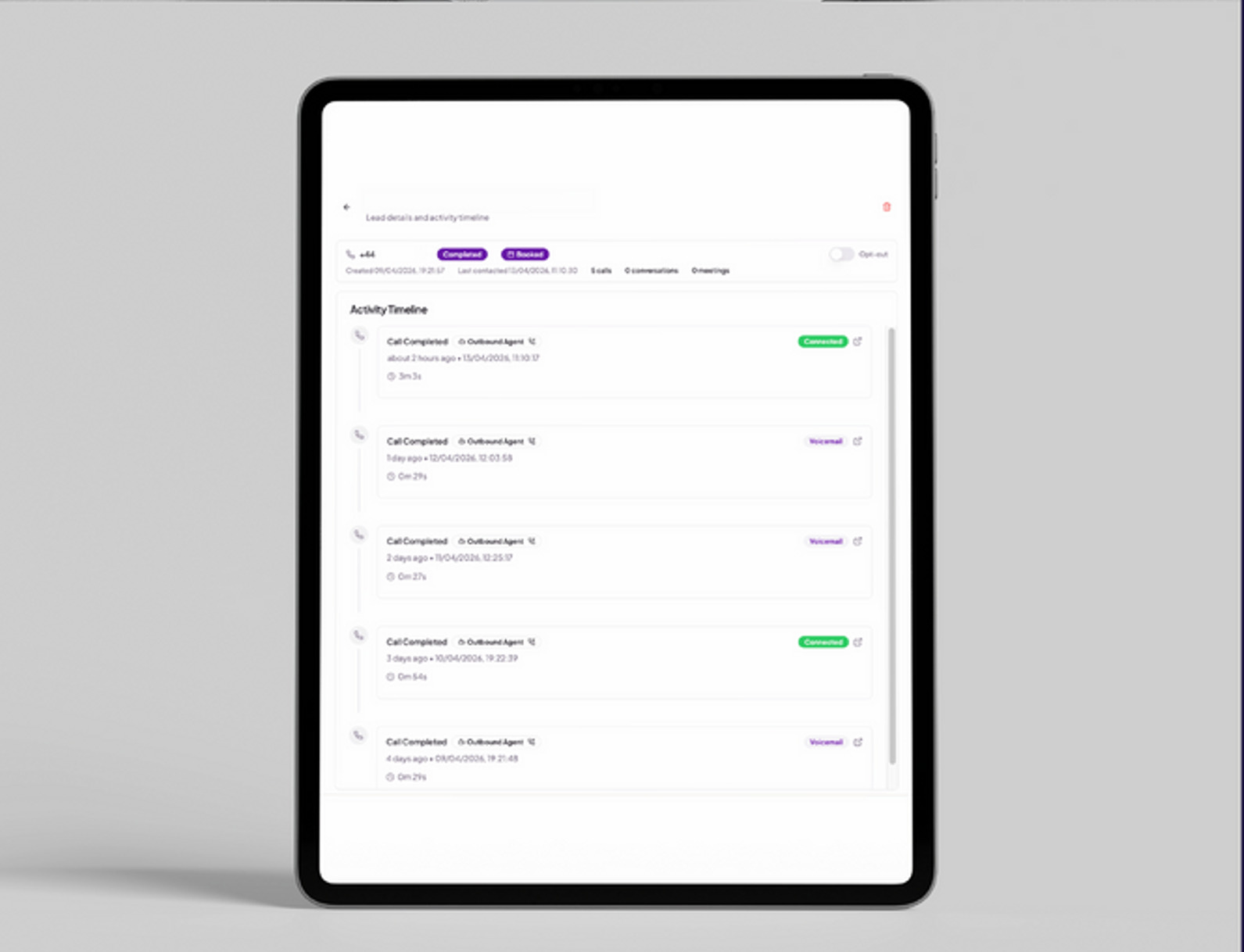 We built a custom backend dashboard giving VEM's leadership team real-time visibility into the system's logic flows, performance and operational data. The business retained full transparency and control, with the ability to update, adjust and manage the system without requiring technical development resource.
Continuous improvement
The system was designed to learn. It captures patterns, recurring questions and drop-off points across the customer journey, giving VEM the insight needed to keep refining the experience over time. The AI does not just automate. It generates the intelligence that makes future decisions better.
The commercial impact
The results were transformative, not just operationally, but commercially.
Response times dropped from an average of 20 minutes to one second. Customer service coverage expanded from standard office hours to 24 hours a day, seven days a week, with no additional staffing cost. The operational cost of running VEM's customer service function fell by 50%. Annual salary savings totalled £350,000.
But the impact that matters most is not in those numbers alone. It is in what those numbers made possible.
With repetitive, high-volume tasks automated, VEM's team were freed to focus on the work that genuinely required human expertise; complex customer conversations, relationship management, and the higher-value interactions that drive retention and referral. The business could grow its customer base without a proportional increase in operational cost. The ceiling had been removed.
Why it matters beyond VEM
VEM's story is not unique to the energy sector. The underlying pattern; a capable team constrained by a manual system, spending the majority of their time on work that adds no strategic value, exists across almost every growing business we work with.
AI automation doesn't replace the people who understand your customers, build your relationships and make the judgements that machines cannot make. It replaces the repetitive, high-volume, low-complexity work that was never the best use of those people in the first place.
When the system handles what the system should handle, the people can do what only people can do. That is where growth comes from.
In their words
"Ouma have transformed us in every aspect — handling major digital automation projects that have saved us £350,000 per annum in cost — as well as being a brilliant marketing partner for us. They are by far the best growth agency I've worked with across a 30 year career."
Daniel Kittow, CEO — Vibrant Energy Matters
Read Ross Jones' insights into why most AI implementations fail, and what businesses need before they start.
Ouma is a strategic growth partner helping ambitious UK businesses build connected growth systems. We work with businesses across strategy, digital infrastructure, performance marketing, CRM and AI automation. If your customer service operation is limiting growth rather than supporting it, start with a conversation.
Summary
Vibrant Energy Matters faced a familiar ceiling: a growing business constrained by a manual customer service operation. Every enquiry, booking and follow-up required human input. Response times averaged 20 minutes. Staffing costs were rising in direct proportion to customer volume. Ouma rebuilt the entire operation using bespoke AI automation — deploying task-specific agents across inbound calls, outbound calls, live chat and WhatsApp, integrated directly with VEM's booking system. The result: response times of one second, 24/7 coverage, a 50% reduction in operational costs and £350,000 in annual salary savings. The lesson: AI doesn't replace good people. It replaces the work that was never the best use of them.
Key takeaways
- The problem was never the team — it was the system they were running on.
- AI automation removed the repetitive work, freeing the team for higher-value conversations.
- Response times fell from 20 minutes to one second — with no human in the loop.
- 24/7 coverage became possible without 24/7 staffing costs.
- £350,000 annual saving came not from cutting people, but from removing the tasks that didn't need them.
FAQs
- How much can AI automation save a business in operational costs?
It depends on the volume of manual, repeatable tasks currently handled by the team. For Vibrant Energy Matters, rebuilding their customer service operation with AI delivered £350,000 in annual salary savings and a 50% reduction in operational costs. Businesses with high volumes of inbound enquiries, bookings, follow-ups or customer updates tend to see the strongest returns. - Will AI automation replace our customer service team?
Not necessarily, and in most cases, that is not the goal. The most effective AI implementations remove people from repetitive, high-volume tasks and free them for higher-value conversations that require human judgement and relationship. VEM's team became more effective, not redundant. - How long does it take to implement AI customer service automation?
This depends on the complexity of your current operation, the quality of your existing data and systems, and how many touchpoints need to be rebuilt. Every implementation Ouma delivers begins with a thorough audit of the existing customer journey before any technology is deployed. - What does an AI-ready customer service operation look like?
One with documented processes, structured data, a mapped customer journey and clear objectives for what the system needs to achieve. AI amplifies what is already there, the cleaner the foundations, the stronger the results. - Is AI customer service reliable enough for a growing business?
When implemented properly, with the right knowledge infrastructure, clear logic flows and human oversight, yes. The key is a bespoke build designed around your specific operation, not an off-the-shelf tool applied generically. The system we built for VEM includes a custom dashboard giving leadership full visibility and control at all times. - How does AI automation work in customer service?
AI automation in customer service uses artificial intelligence to handle customer interactions such as enquiries, bookings, follow-ups and updates, without requiring human input for every exchange. Rather than following fixed scripts, AI automation learns from data, adapts to different query types and routes complex interactions to the right team member when human judgement is needed. For Vibrant Energy Matters, AI automation across inbound calls, outbound calls, live chat and WhatsApp reduced response times from 20 minutes to one second and delivered 24/7 coverage that no human team could cost-effectively provide. The key is building the system around your specific operation, not applying a generic tool and hoping it fits.