Why most AI implementations fail, and what businesses need before they start
There's a pattern emerging in businesses that have invested in AI over the past two years. The tool gets purchased, the team gets excited, a few use cases get identified, and then... somewhere along the way, it quietly stops delivering what was promised.
By Ross Jones · 2026-08-25 · 7 min read

The AI implementations didn't work. Or more accurately, the AI worked exactly as it was designed to. The business just wasn't ready for it.
Everyone is talking about which AI tools to use. Far fewer people are talking about what needs to be true about your business before AI can do anything meaningful for it.
That gap is costing businesses significant time, money and credibility, and it's entirely avoidable. It is also the reason most AI implementations never reach the commercial outcomes they were designed to deliver.
Why most AI implementations fail
Research from MIT found that 95% of custom enterprise AI pilots fail to reach production with measurable impact. The RAND Corporation puts the broader AI project failure rate at over 80%. These aren't fringe statistics. They represent the overwhelming majority of AI investment across businesses of all sizes.
The reasons given are almost always the same: poor data quality, skills shortages, and no clear pathway from pilot to production. But underneath those surface explanations is a more fundamental problem.
Most businesses implement AI on top of broken systems.
They automate a process that was already inefficient. They install a chatbot in front of a customer journey that was already creating friction. They use AI to generate more content for a marketing system that was already producing content nobody was reading. They add intelligence to infrastructure that was never properly built.
AI doesn't fix broken systems. It accelerates them, in whatever direction they are already heading. If your foundations are solid, AI makes them significantly more powerful. If your foundations are weak, AI makes the weaknesses more visible, more expensive and harder to ignore.
 The difference between using AI tools and building an AI-ready business
Using AI tools means subscribing to a platform, deploying a feature, automating a task. It's transactional, it's relatively easy, and on its own, it rarely produces the commercial outcomes businesses are hoping for.
Building an AI-ready business means something different. It means having the data infrastructure, process clarity, system integration and strategic direction that allows AI to function properly. It means knowing what you are trying to achieve before you decide which tool will help you achieve it. It means treating AI as an amplifier of good thinking, not a replacement for it.
The businesses seeing genuine commercial returns from AI aren't necessarily using more tools or more advanced technology than everyone else. They're using AI in contexts where the foundations were already strong. Their data is clean and structured. Their processes are documented and consistent. Their customer journeys are mapped and understood. Their teams know what success looks like and how to measure it.
That is what an AI-ready business looks like, and it is far less common than the volume of AI investment would suggest.
AI won't fix a broken marketing system. Here's what will.
Marketing is where this failure pattern is most visible (and most expensive).
Businesses invest in AI content tools when their real problem is that nobody has defined who they are writing for or what those people actually want to hear. They use AI-powered ad optimisation when their real problem is that the offer is unclear and the landing page converts at 1%. They implement AI email automation when their real problem is that their CRM is a mess of unqualified contacts with no segmentation.
In each case, the AI works; it generates content, it optimises bids, it sends emails, it just doesn't produce growth, because the strategic and structural problems that were there before are still there, now running at a higher volume, at a faster pace.
The fix isn't a better AI tool. The fix is the thinking and infrastructure that should have come first.
Before AI can improve your marketing, you need clarity on who your customer is and what moves them. You need a customer journey that is mapped, understood and functioning. You need tracking and attribution that tells you what is actually working. You need a CRM that reflects reality. You need messaging that is differentiated and commercially grounded.
None of that is delivered by AI. All of it requires strategic thinking and proper systems design. Once those things are in place AI can produce fantastic results, because it has something solid to grow.
What businesses need before they start with AI
If you're considering significant AI investment, whether that's marketing automation, customer service AI, operational systems or anything else, these are the questions worth answering first.
Is your data clean and structured?
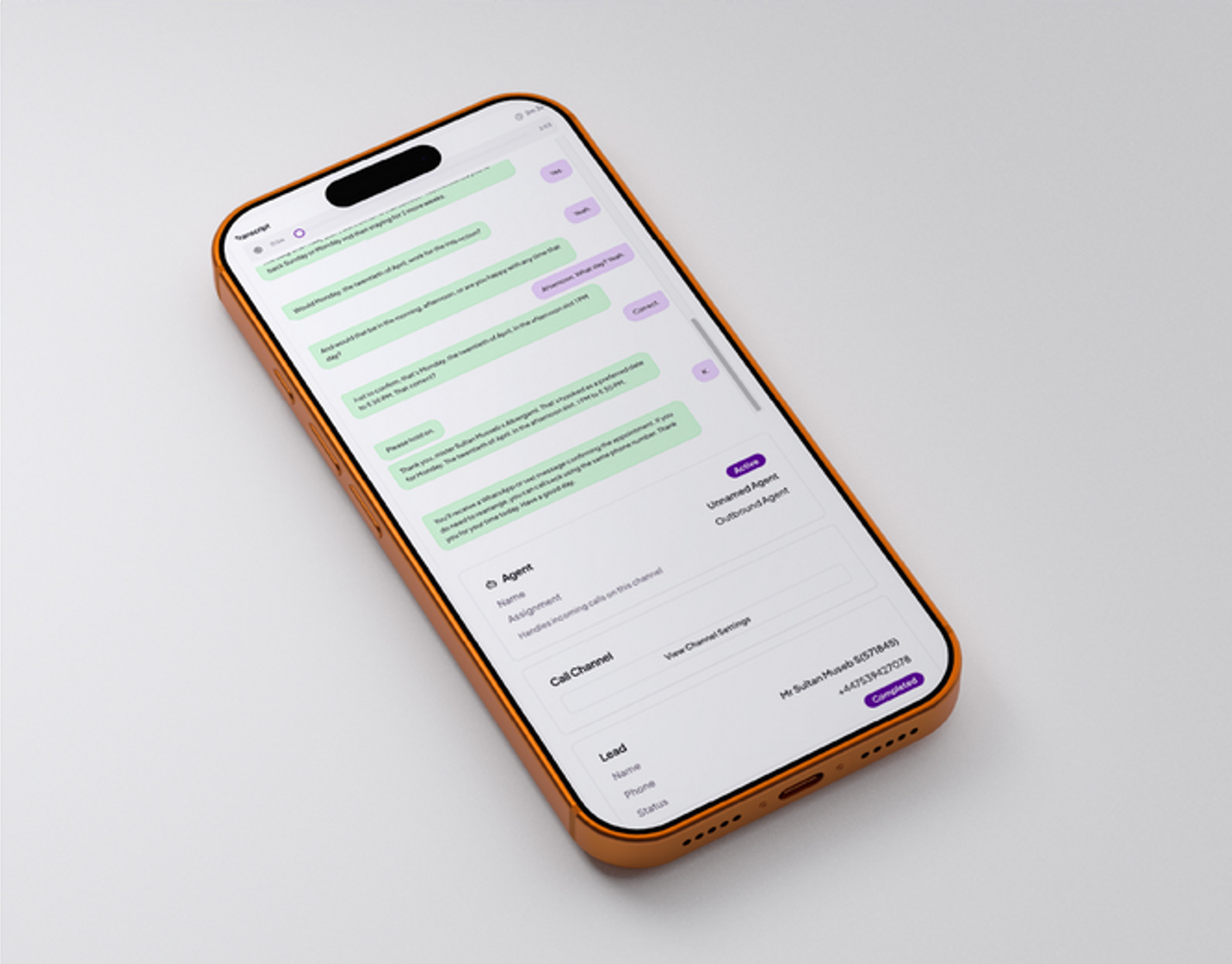 AI systems are only as good as the data they run on. If your CRM is incomplete, your customer data is fragmented across multiple platforms, or your tracking has gaps, AI cannot make reliable decisions. It will optimise for the wrong signals, personalise based on inaccurate information, and produce outputs that feel precise but are built on shaky foundations.
Before any AI deployment, audit your data. Understand what you have, where it lives, how complete it is and whether it accurately reflects your customers and their behaviour.
Are your processes documented and consistent?
AI is exceptionally good at automating consistent processes. It struggles with processes that are inconsistent, poorly defined or dependent on tacit knowledge that has never been written down.
If the way your team handles a lead depends on who picks it up that day, AI can't reliably automate it. If your customer onboarding varies significantly from client to client, AI cannot meaningfully improve it. Consistency is a prerequisite for automation, and most businesses have less of it than they think.
Do you know what success looks like AND how to measure it?
This sounds obvious, but in practice it's one of the most common gaps. Businesses implement AI with a vague objective without defining what that means in measurable terms.
Without clear success metrics defined upfront, AI implementations drift. Teams cannot evaluate whether they are working.
Define your commercial objective precisely before you start. Not just 'improve lead quality'. You need a target AI can be oriented toward. A vague aspiration isn't it.
Is your team ready to work with AI, not just use it?
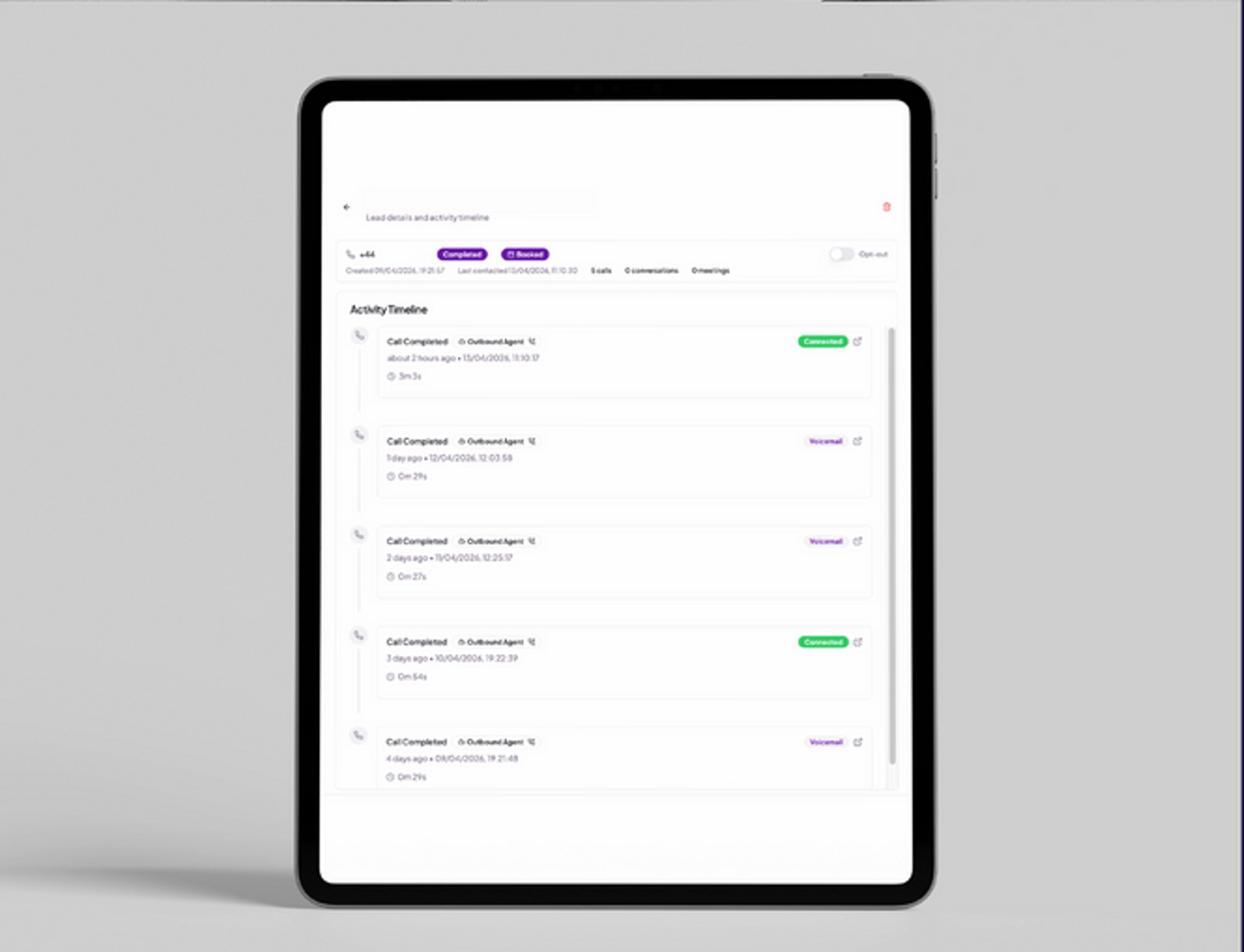 There is a difference between a team that uses AI tools and a team that knows how to work with AI effectively. The latter requires a level of critical thinking, editorial judgement and strategic oversight that not every team currently has.
AI-generated outputs need evaluation from real people, AI-driven decisions need oversight, AI-identified patterns need interpretation. Businesses that treat AI as a set-and-forget system tend to discover its limitations at the worst possible moment... usually when something has gone wrong at scale.
Investing in AI literacy across your team isn't optional. It's the difference between AI that creates leverage and AI that creates liability.
Is there a clear pathway from pilot to production?
One of the most consistent outcomes across failed AI implementations is the absence of a production pathway. A pilot gets run, results get generated, and then nothing happens, because nobody planned for what success would require in terms of integration, resource, process change and ongoing management.
Before you start, plan for what happens if it works. What systems does it need to integrate with? Who owns it? How is it maintained? What does scaled deployment look like? These questions are not exciting. They are also the reason most AI pilots never become commercial assets.
The businesses getting this right
 At Ouma, we have seen what happens when AI is implemented into well-built systems, and the results are transformative in a way that justifies every conversation about AI potential.
We worked with VEM to implement AI-powered customer service automation into a business with clear processes, structured data and a properly mapped customer journey. The result was £350,000 in annual salary savings, a 50% reduction in operational costs, and 24/7 customer service coverage with one-second response times.
That outcome wasn't produced by the AI alone. It was produced by the combination of AI capability and a business that was genuinely ready to use it. The foundations were there and the AI amplified them.
That is what AI implementation looks like when it is done properly, and it's what becomes possible for any business willing to fix the system before deploying the tool.
A practical starting point
If you aren't sure whether your business is AI-ready, start with an honest audit of the foundations.
Look at your data quality. Map your key processes. Define your commercial objectives with precision. Assess your team's capacity to work critically with AI outputs. And identify one specific, well-defined use case where AI could genuinely add value, rather than starting with the tool and working backwards to a problem it might solve.
The businesses that will capture the most value from AI over the next three to five years are not the ones who moved fastest, they are the ones who built properly before they scaled. That distinction is already separating the businesses seeing real returns from the ones quietly writing off their AI investment as a lesson learned.
Ross Jones is Co-Founder and CEO of Ouma, a strategic growth partner helping ambitious UK businesses build connected growth systems. Ouma works with businesses across strategy, digital infrastructure, performance marketing, CRM and AI automation.
Summary
Most AI implementations fail not because the technology doesn't work, but because it was deployed into a business that wasn't ready for it. Research shows over 80% of AI projects fail to deliver measurable impact. The reason is almost always the same: weak data, unclear objectives, inconsistent processes, and no pathway from pilot to production. AI doesn't fix broken systems - it accelerates them in whatever direction they're already heading. This piece covers what businesses actually need in place before investing in AI, the difference between using AI tools and building an AI-ready business, and what genuine AI success looks like when the foundations are right.
Key takeaways
- AI failure is almost never a technology problem, it's a foundations problem. Poor data, vague objectives and inconsistent processes are the real culprits.
- AI amplifies what's already there. Strong foundations become significantly more powerful. Weak ones become more expensive.
- There's a meaningful difference between using AI tools and being AI-ready. Most businesses are doing the former without having built the latter.
- Fix the marketing system before deploying the AI. Unclear strategy, weak messaging and broken customer journeys don't get solved by automation, they get scaled.
- The businesses seeing real returns from AI invested in clarity before they invested in technology.
FAQs
- Why do most AI implementations fail?
The most common reasons are poor data quality, unclear objectives, inconsistent underlying processes, and no pathway from pilot to production. Most AI failures are not technology failures — they are infrastructure and strategy failures. AI amplifies what is already there. If the foundations are weak, AI makes the problems bigger, not smaller. - What does a business need before implementing AI?
Clean and structured data, documented and consistent processes, clearly defined success metrics, a team capable of working critically with AI outputs, and a planned pathway from pilot to scaled deployment. These foundations need to be in place before AI investment begins, not built alongside it. - What is the difference between using AI tools and building an AI-ready business?
Using AI tools means deploying technology to automate tasks. Building an AI-ready business means having the strategic clarity, data infrastructure, process consistency and team capability that allows AI to produce genuine commercial outcomes. The tool is the last step, not the first. - Will AI fix my marketing if it isn't performing?
No. AI will accelerate your marketing in whatever direction it is already heading. If your strategy is unclear, your messaging is weak, or your customer journey has friction, AI will make those problems faster and more expensive, not solve them. Fix the foundations first. Then use AI to scale what works. - How do I know if my business is ready for AI?
Ask four questions. Is your data clean and structured? Are your key processes documented and consistent? Do you have precise commercial objectives for what AI needs to achieve? Does your team have the capacity to evaluate and oversee AI outputs? If the answer to any of these is no, that is where to start, before any AI tool is deployed. - What AI implementations are most likely to succeed?
Those with a specific, well-defined use case, clean underlying data, clear success metrics, strong human oversight and a planned integration pathway. The most successful AI deployments we have seen are not the most ambitious, they are the most precisely scoped.